




 Neil Blender is one of those rare skateboarders whose influence is almost impossible to measure, because it reaches far beyond contest results, video parts, and pro model decks. Born in 1963 and raised in Anaheim, California, Blender started skating in the late 1970s and quickly became one of the most original riders of the 1980s. At a time when skateboarding was trying to define itself as either a competitive sport or a rebellious youth movement, Blender pushed it somewhere stranger, funnier, and more creative. He made skateboarding feel less like something with rules and more like a wide-open art project on wheels. The Skateboarding Hall of Fame describes him as a creative counterweight to skateboarding’s bad-boy image and credits him with helping steer the culture toward something more spontaneous, artistic, and non-conformist.
Blender’s early sponsor path helped place him right in the heart of old-school skateboarding’s golden era. He rode for Powerflex as a young skater before becoming closely associated with Gordon & Smith, better known as G&S, one of the most important brands in surf and skate history. His first G&S pro model arrived in the early 1980s and immediately stood apart, not just because of the shape or the skating behind it, but because Blender drew the graphic himself. That was a major shift. Before Blender, most skateboard graphics were created by company artists or outside illustrators. Neil brought the rider’s own hand directly onto the deck, helping open the door for generations of skaters to see board graphics as personal expression instead of just branding.
On the board, Blender’s skating was loose, inventive, powerful, and deeply personal. He had the kind of style that made simple things look strange and difficult things look accidental in the best possible way. He is credited with inventing, naming, or popularizing a long list of tricks and ideas, including the Wooly Mammoth, Gay Twist, Lien Air, Jolly Mamba, Donner Party, and helping popularize the No Comply after John Lucero invented it.
He also helped make skateboarding’s trick language feel more playful, giving moves names that sounded like inside jokes from another planet. In a culture that loves progression, Blender’s contribution was not just what he did, but how he made invention feel natural, ridiculous, and fun.
Blender’s graphics are a huge part of his legend. His art never tried to look polished in the traditional sense, and that was exactly the point. The hand-drawn lines, oddball characters, strange faces, distorted bodies, and surreal humour felt like they came straight out of a notebook, a zine, or the margins of a school desk. In the 1980s, when many skateboard graphics leaned into skulls, flames, daggers, monsters, and heavy-metal menace, Blender’s work brought in a completely different kind of chaos. It was weird, warm, funny, awkward, and unmistakably human. The G&S Coffee Break graphic remains one of the great examples of this approach, a board that feels more like a cartoon daydream than a standard pro model. Tracker History describes Blender as one of the first to bring a homespun, surreal twist to skateboard graphics, and that description still nails it.
His creative reach did not stop at deck art. Blender contributed to skateboarding’s printed culture through cartoons, writing, and visual weirdness, including work connected to TransWorld Skateboarding and zine-style skate media. His humour always felt sideways, as if the joke was happening somewhere behind the obvious joke. That sensibility became a major part of skateboarding’s creative DNA. The modern idea that a skater can also be an artist, designer, writer, filmmaker, photographer, musician, or cultural troublemaker owes a lot to people like Neil Blender. He helped show that skateboarding was not just about tricks. It was about seeing the world differently and then leaving scratch marks all over it.
Neil’s creative voice also spilled into skate media through his TransWorld Skateboarding column, “The Aggro Zone,” sometimes written as “Aggro Zone.” In the early experimental days of TransWorld, the column gave Blender space to turn photos, captions, weird observations, and anti-editorial humour into something that felt more like a skate zine beamed in from his own brain than a standard magazine feature. It matched the way he skated and drew: loose, strange, funny, instinctive, and impossible to fake. TransWorld later described Aggro Zone as one of its early regular columns from the cut-and-paste era of the magazine, with Blender shooting and choosing photos through the same offbeat eye he brought to skating, art, and music. It was another reminder that Blender was not just participating in skateboarding culture; he was helping shape the way it sounded, looked, and thought.
In 1990, Blender helped found Alien Workshop with Chris Carter and Mike Hill, a move that carried his off-centre vision into the next era of skateboarding. Alien Workshop was not a typical California skate company. Based out of Ohio, it felt mysterious, cerebral, and slightly extraterrestrial from the start. Blender’s involvement helped give the brand some of its early artistic credibility, and the company’s 1991 video Memory Screen became one of the most influential skate films of its generation. It did not look or feel like a regular skate video. It was dreamlike, fragmented, and strange, matching the way skateboarding itself was changing as the 1990s began.
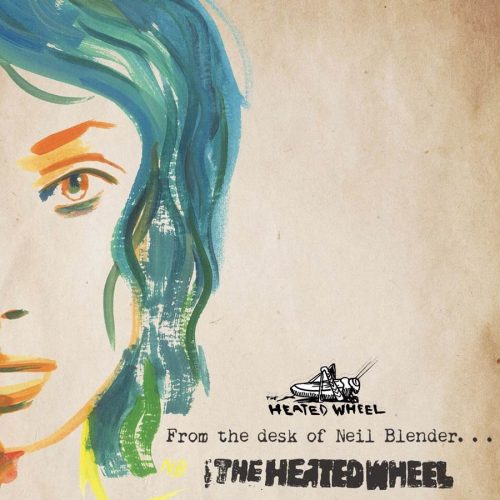
As a sponsored skater, Blender’s name is tied to several important parts of skate history, including G&S, Tracker Trucks, Alien Workshop, and later creative projects like The Heated Wheel. What makes his sponsorship story different is that Neil never seemed like someone who simply wore a logo and performed a role. He bent the brands around him. Whether it was a board graphic, a photo, a trick name, a video appearance, or a strange little moment that made no obvious marketing sense, Blender brought his own world with him. That is why his influence still feels so strong. He was not just a team rider. He was a tone-setter.
Neil Blender’s legacy is massive because he changed what a pro skateboarder could be. He proved that personality could matter as much as contest placing, that graphics could come directly from the skater’s hand, and that weirdness could be a strength instead of a flaw. His skating helped expand the vocabulary of transition and street-influenced creativity, while his art helped reshape the visual language of skateboarding itself. In 2015, he was inducted into the Skateboarding Hall of Fame, a fitting honour for someone whose fingerprints are all over modern skate culture.
Today, Neil Blender remains one of skateboarding’s great originals: artist, inventor, pro skater, company founder, and certified oddball legend. His work still feels fresh because it was never chasing a trend in the first place. It came from instinct, humour, imagination, and a refusal to make skateboarding too serious. That may be the real Neil Blender lesson. Skateboarding is at its best when it has room for the strange ones, the funny ones, the artists, the backyard inventors, the notebook doodlers, and the people who look at a curb, a ramp, a wall, or a blank skateboard deck and see something nobody else sees yet. Neil Blender didn’t just leave a mark on skateboarding — he drew it crooked, named it something weird, and made the whole thing more interesting forever.

