
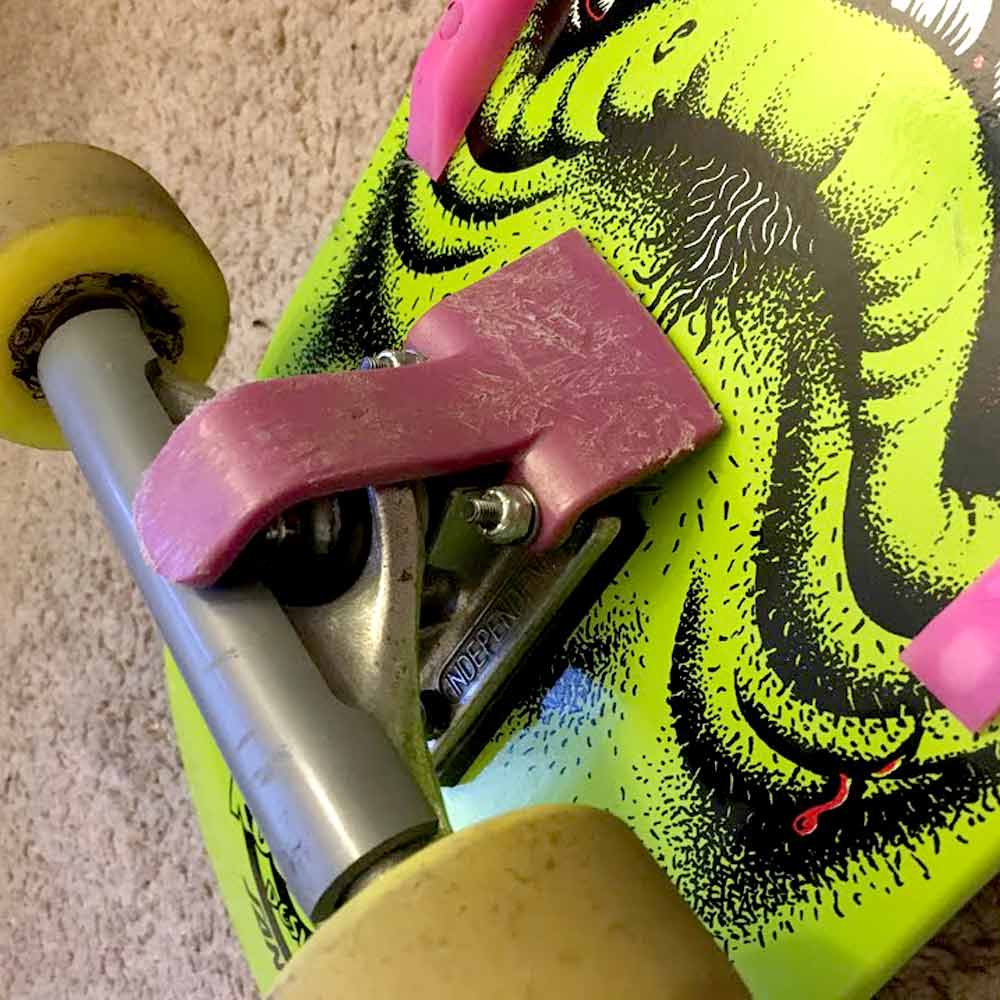
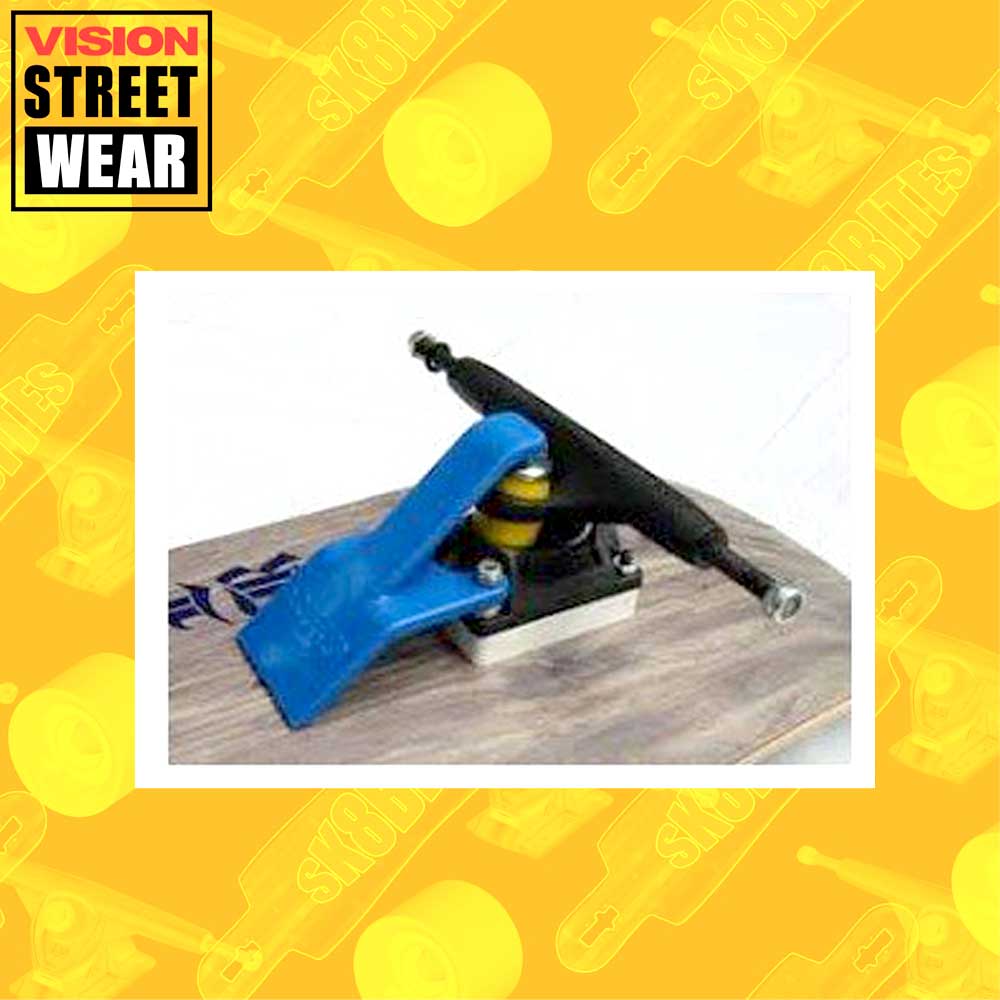
 Lappers emerged in the early to mid-1980s, a period when transition skating was evolving rapidly and ramp builders were shaping backyard halfpipes, vert ramps and concrete bowls with far less uniformity than today. Coping placements were inconsistent, the concrete was rough, and skaters were pushing deeper into smiths, feebles, disasters and lip tricks that required the rear truck to clear the lip smoothly. The problem was simple: the kingpin on traditional trucks stuck out just enough to catch the coping. A single hang-up at speed could end a session instantly. Early riders solved this by cutting, shaping or melting bits of plastic into crude guards that sat over the kingpin to help the truck glide across coping. These homemade protectors became the prototypes for what the skate world soon called “lappers.”
Once the idea proved useful, companies began producing more refined versions. By the mid-1980s, brands like Vision, Powell Peralta and Gullwing were offering injection-molded lappers designed to fit the geometry of the era’s trucks. Vert and pool skaters quickly adopted them because they made tricks like disaster re-entries, tail blocks and smith-type stalls far more reliable. Instead of slamming into coping, the lapper would hit first, allowing the truck to slide over the lip with a smoother, rounded contact point. In a time when kingpin clearance was minimal and kingpin breakage was common, lappers also reduced wear and prevented repeated impact on hardware, which kept setups riding longer. Their usefulness extended beyond vert. Street skaters experimenting with early curb tricks—slappies, wallrides, and primitive crooked grinds—found that a lapper could help a board slide across rough concrete ledges without catching. While not as common in street setups as rails or tail guards, lappers offered an extra layer of security for riders who mixed transition and curb skating or who skated in areas with inconsistent construction quality. They were especially popular in regions where DIY spots and rough municipal parks demanded hardware that could handle unpredictable terrain.
By the early 1990s, changes in truck design reduced the need for lappers. Companies pushed kingpins deeper into the hanger, redesigned baseplates, and introduced lower-profile geometries that provided better coping clearance. Street skating also became the dominant discipline, shifting the hardware market away from transition-specific accessories. As a result, lappers faded into near obscurity, remembered mostly as a quirk of the ’80s vert era.
However, their recent resurgence is rooted in both function and history. The renewed interest in old-school decks, reissue setups and bowl skating brought back hardware that mirrors the classic shapes and truck geometries of the original lapper generation. This revival made the old problem relevant again—modern coping meets vintage truck clearance issues the same way it did forty years ago. Skaters rediscovered that a lapper still does its job exactly as intended: it helps the rear truck clear the coping smoothly, reduces kingpin damage, protects hardware, and lowers the risk of hang-ups on rough transitions.
Today, lappers sit at an interesting intersection of skateboarding culture. They are part functional tool, part historical relic, and part stylistic nod to a specific era of progression. They represent a time when skaters solved problems with ingenuity and bits of plastic, and they continue to offer practical benefits for bowl riders, ramp skaters and anyone running a setup with exposed kingpin geometry. Their continued presence in skate shops is a reminder that some of skateboarding’s oldest innovations earned their place not through trends, but through necessity and persistence.

