




 THE ORIGIN STORY
Berlinwood starts in 2002, when Timo Lieben began making handmade wooden fingerboard decks in Berlin at a time when most setups were still plastic, improvised, and held together with whatever worked. That alone was a shift, but what truly set Berlinwood apart was how rare and unattainable it felt in the early days. Wooden decks weren’t common, online shops were limited, and distribution was almost mythical. You didn’t casually “get” a Berlinwood—you hunted one down, saved for it, waited, or knew someone who knew someone. For many riders, seeing a Berlinwood in person for the first time was a moment, not just a product sighting.
As Mike Schneider explains in the museum section of Flatface Fingerboards, owning a Berlinwood back then carried real weight. They were rare enough that when one showed up at a session, it immediately stood out. Riders treated them differently—careful tuning, deliberate setups, tricks practiced with intention. A Berlinwood wasn’t something you replaced casually; it was something you earned, rode hard, and held onto until it was truly done. That sense of scarcity and craftsmanship helped define the culture of modern fingerboarding, pushing it away from toys and toward something closer to real skateboarding in miniature.
WHAT MAKES A BERLINWOOD A BERLINWOOD
Berlinwood’s identity is the deck itself: classic 5-ply wooden construction, shaped with real skateboard geometry and refined over years of riding and feedback. Nose and tail shapes are purposeful, concaves are intentional, and the feel is designed for control rather than gimmicks. Over time, Berlinwood expanded its range to include multiple widths and concave options, allowing riders to dial in exactly how locked-in or loose they want their setup to feel. The consistency from deck to deck became part of the appeal—when you bought a Berlinwood, you knew exactly what you were getting.
PRODUCTS AND THE “PRO” ECOSYSTEM
Berlinwood has always existed within a larger pro-level ecosystem rather than as a standalone novelty brand. From single decks to complete setups, signature graphics, and era-defining releases, the brand evolved alongside fingerboarding itself. As tricks became more technical and lines more realistic, Berlinwood shapes followed suit. These boards were made to be ridden hard, tuned properly, and skated with intent, which is why they’ve remained relevant across generations rather than fading into nostalgia.
THE BLACKRIVER MERGER AND WHAT IT REALLY MEANS
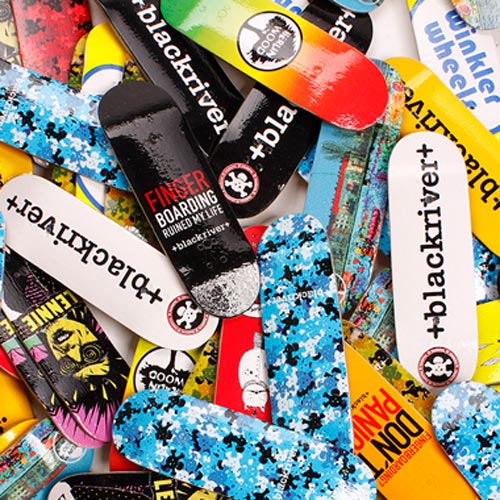
Berlinwood’s story eventually becomes inseparable from Blackriver as the scene professionalized. Blackriver, founded in 1999, was already building the infrastructure of modern fingerboarding through ramps, events, and team support. Bringing Berlinwood production under the same roof wasn’t about replacing what made Berlinwood special—it was about preserving it. Today, Berlinwood and Blackriver decks are produced using the same standards, techniques, and materials, sharing a workshop and philosophy while offering different branding and graphics. You’re not choosing between two levels of quality; you’re choosing which identity you want stamped on the same top-tier build.
FUTURE AND LEGACY
Berlinwood’s legacy is simple and lasting: it helped define what a “real” fingerboard deck could be and set expectations that still guide the scene today. From early scarcity and craftsmanship to modern consistency and accessibility, Berlinwood represents the bridge between fingerboarding’s underground roots and its fully realized present. With Blackriver continuing to expand events, innovation, and global scene support, Berlinwood’s future isn’t about looking back—it’s about remaining a platform for progression, letting each new generation experience that same moment riders felt years ago when they finally held their first Berlinwood.