




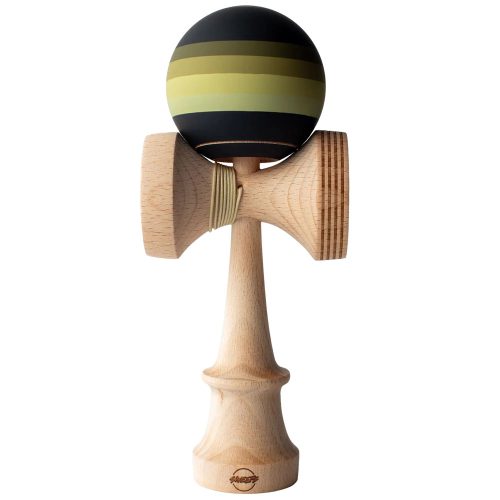

Sweets Four Piece Dune Turbo Shape Kendama brings together old-school kendama style and modern playability in one super clean setup. The Four Piece series is Sweets’ modern take on classic kendama design, using an OG-inspired tama with four colour stripes through the centre, a contrasting top dot, and engraving around the bevel.
The Dune colourway gives this one a grounded, skate-shop feel — black, olive, tan, and sand tones against natural beech wood. It is simple, stylish, and seriously good-looking without being overdone.
This model is built on the Turbo Shape, a modern Sweets shape designed by Christian Fraser. Sweets describes Turbo as having a sleek new silhouette that feels good in the hand and is honed for taps and kenflips. It also features the Break-In Bevel, designed to help stalls become more locked-in as the tama wears and breaks in. That makes it a great choice for players who want something that can handle both beginner fundamentals and more technical progression.
The construction is classic and dependable: beech ken, beech tama, Anti-Skid 2.0 clear coat, and that Break-In Bevel setup. Anti-Skid 2.0 gives you grip with a little room to adjust, which is perfect when you are battling balance tricks, stalls, lighthouse, lunar, or trying to get more control on those repeated “one more try” attempts. 
 Sweets Kendamas is a Minnesota-based kendama brand founded in 2010 by Matt “Sweets” Jorgenson. Born from a backyard shed and a love for skill toys, Sweets has grown into one of the leading names in modern kendama, known for creative designs, player-focused shapes, hand-painted finishes, tutorials, pro models, and a massive global community.
From first spikes to competition-level tricks, Sweets keeps kendama fun, challenging, and seriously addictive. For skaters, fingerboarders, yo-yo players, and anyone who loves progression-based play, Sweets Kendamas brings that same “one more try” energy in the palm of your hand.
What makes Sweets special is that it feels less like a toy company and more like a real scene. Kendama has the same addictive progression as skateboarding, fingerboarding, yo-yo, freestyle, and other skill-based cultures: you miss, you miss, you miss, then suddenly you lace the trick and you are hooked.
Sweets Kendamas is a Minnesota-based kendama brand founded in 2010 by Matt “Sweets” Jorgenson. Born from a backyard shed and a love for skill toys, Sweets has grown into one of the leading names in modern kendama, known for creative designs, player-focused shapes, hand-painted finishes, tutorials, pro models, and a massive global community.
From first spikes to competition-level tricks, Sweets keeps kendama fun, challenging, and seriously addictive. For skaters, fingerboarders, yo-yo players, and anyone who loves progression-based play, Sweets Kendamas brings that same “one more try” energy in the palm of your hand.
What makes Sweets special is that it feels less like a toy company and more like a real scene. Kendama has the same addictive progression as skateboarding, fingerboarding, yo-yo, freestyle, and other skill-based cultures: you miss, you miss, you miss, then suddenly you lace the trick and you are hooked.


