



 Few names in skateboarding history carry the mythic weight of Powell Peralta. Founded in 1978 by engineer George Powell and former Z-Boy Stacy Peralta, the company helped define—and continuously redefine—what skateboarding could be. With a blend of innovative product design, legendary team riders, and genre-defining skate videos, Powell Peralta didn’t just build a brand; it built a movement. From the Bones Brigade era to the resurgence of freestyle and creative skating with riders like Andy Anderson and Chris Hiett, Powell’s legacy is both foundational and constantly evolving.
Bones Brigade: Where Legends Were Made
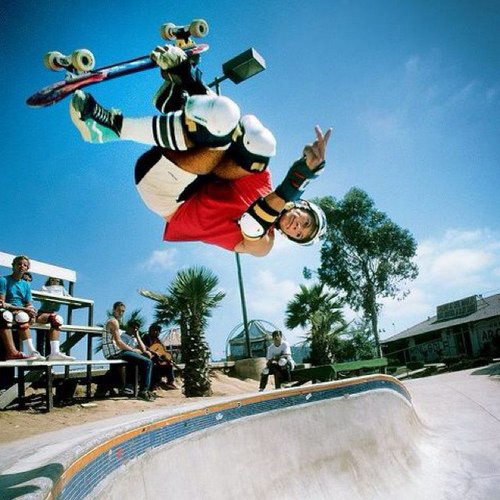
The 1980s saw Powell Peralta catapult to the top of the skateboarding world with the creation of the Bones Brigade—a superteam of young skaters including Tony Hawk, Rodney Mullen, Steve Caballero, Mike McGill, Lance Mountain, and Tommy Guerrero. Each rider brought a unique style and approach that reshaped what was possible on a skateboard. Peralta’s genius lay in not only finding the talent but also filming and packaging it for the world to see. The company’s groundbreaking video series—including The Search for Animal Chin, Future Primitive, and Ban This—set the template for modern skate videos, blending storytelling, humor, and skate progression in a way that captured the imagination of a generation. These videos were more than promotional tools—they were blueprints for what skateboarding could become.
Rebirth and Reissues: Fueling the Next Wave
After a brief hiatus and the formation of Powell Skateboards and Bones Wheels as separate entities, Powell Peralta was revived in the early 2000s with a renewed focus on heritage and innovation. The reissue deck market exploded, driven in part by Powell Peralta’s decision to bring back classic graphics on modern boards. This nostalgia-driven revival found an audience not only with older skaters returning to their roots, but also younger skaters drawn to the timeless artwork of VCJ and the mystique of the Bones Brigade era. Yet Powell wasn’t just about looking back. They continued pushing forward with new products like Dragon Formula wheels and a diverse team of modern riders.
Andy Anderson: The Modern-Day Alchemist
Perhaps no skater embodies Powell Peralta’s fusion of past and present better than Andy Anderson. With his signature helmet, unique trick selection, and absolute mastery of board control, Andy has bridged the gap between freestyle and street in a way that feels entirely fresh. His part in Seen Him was a revelation—blending Rodney Mullen-inspired footwork with rails, stairs, and ledges in ways never seen before. Andy’s pro model boards have become cult favorites, each one stamped with symbolism and meaning, reflecting his philosophical approach to skateboarding. For Powell Peralta, Andy represents a return to innovation, discipline, and pure creativity—the same qualities that made the brand so influential in the first place.
Chris Hiett: From Midwest Origins to Skateboarding’s Creative Frontier
Chris Hiett grew up skating the streets and parks of Evansville, Indiana, where his early exposure to shaped boards and DIY spots set the tone for his unconventional path in skateboarding. With strong support from his family and local shop Killer Skatepark, Chris developed a style rooted in creativity, individuality, and flow. He caught the attention of Powell Peralta and Fallen Footwear during a Midwest tour, eventually moving to California at 18 and turning pro for Powell by the age of 20. Unlike most modern pros, Chris prefers riding retro-inspired shapes—especially fish-style decks—which reflect his respect for skate history and set him apart visually and technically. His skating blends elements of transition, street, and freestyle without being confined to any one discipline, echoing the fluidity of skaters like Ben Raybourn and Dylan Rieder.
Beyond the board, Chris brings a unique voice to skateboarding culture. His grip tape art, social media presence, and overall outlook are grounded in authenticity and self-expression. He uses his platform to speak openly about mental health, creativity, and the importance of embracing one’s individuality—values he also channels into his pro models and video parts. His debut Powell graphic, a skeleton jack-in-the-box drawn by VCJ, symbolizes his philosophy of breaking free from expectation. With his roots in the Midwest and his vision firmly planted in the future, Chris Hiett is helping shape a version of skateboarding that’s more inclusive, expressive, and connected to its artistic core.
A Lasting Legacy in Skate Culture
Powell Peralta’s impact on modern skateboarding is impossible to overstate. Their video formula laid the groundwork for the way skateboarding is filmed, edited, and consumed today. Their riders became icons not only for their tricks, but for their personalities, fashion, and philosophies. The artwork, thanks largely to Vernon Courtlandt Johnson, became some of the most recognizable in skate history. And their commitment to quality—from Bones Bearings to Dragon Formula urethane—continues to set benchmarks in performance.
More than a brand, Powell Peralta is a living history of skateboarding—one that never stops writing new chapters. From the backyard pools of the 1980s to the Olympic stage, from freestyle footwork to 9-stair rail combos, their influence flows through every crack and crevice of the culture. Whether you’re picking up a reissue for your wall or lacing up to bomb a hill with Dragon wheels, Powell Peralta is still, unmistakably, at the heart of skateboarding’s past, present, and future
