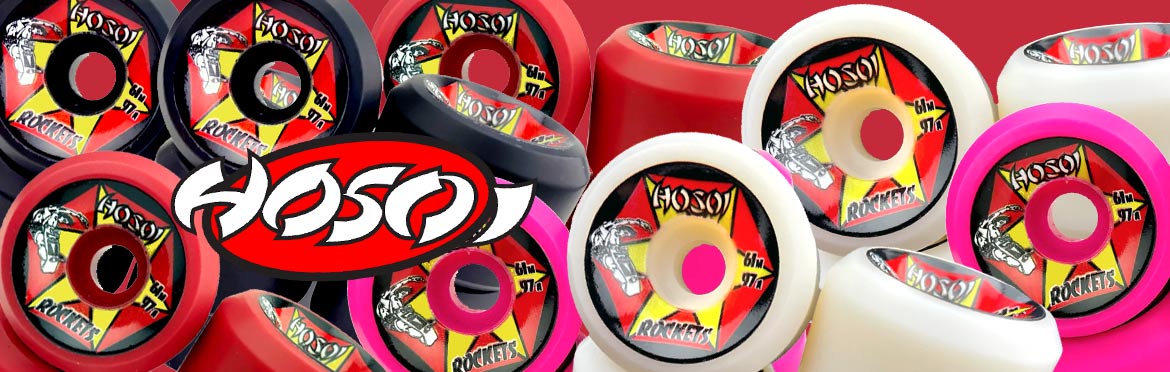


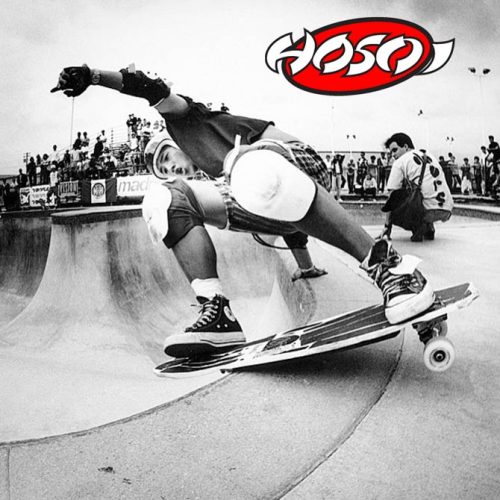



 Christian Hosoi did not just become one of the biggest skateboarders of the 1980s. He became one of the clearest examples of what skateboarding could look like when raw talent, personal style, celebrity energy, and original product design all collided at full speed. In an era packed with giants, Hosoi stood apart because he made vertical skateboarding look glamorous, dangerous, graceful, and completely untouchable. Where Tony Hawk was often framed as the technical contest machine, Hosoi was the showman: huge airs, laid-back confidence, rock-star clothes, long hair, and a style that looked as powerful in a photograph as it did on a ramp. The Skateboarding Hall of Fame describes him as a skater who blurred the line between rock star and pro skater, and that is still one of the cleanest ways to explain his place in skateboard history.
Hosoi was born Christian Rosha Hosoi in 1967 and grew up around the Southern California skate scene at exactly the right moment. His father, Ivan “Pops” Hosoi, managed Marina Del Rey Skatepark, giving Christian the kind of daily access that turns talented kids into lifers. He was around older Dogtown-era figures, watched the language of pool and vert skating develop in real time, and absorbed the influence of riders like Tony Alva, Jay Adams, Shogo Kubo, and Stacy Peralta. By age 11, he had already been photographed for Skateboarder magazine, and by 14 he had turned pro for Sims, a speed of progression that sounds almost unreal now but made perfect sense in the hyper-charged vert boom of the early 1980s.
His sponsor path reads like a compressed history of skateboarding’s most important transition years. As an amateur, Hosoi was connected with Powell Peralta, then moved through Dogtown, Sims, and Alva Skates before pushing into his own name and brand identity. Each stop mattered. Powell represented the rising professionalism of the early 1980s. Dogtown connected him to the raw Los Angeles lineage. Sims put him into the larger pro-board world. Alva gave him a link to one of his heroes and to the wild shape-driven board culture of the period. By the mid-1980s, Hosoi had enough heat behind him to do what only a handful of skaters had done: turn his own name into a skateboard company. The Hall of Fame notes that after those brief sponsor stops, he became one of the early pros after Brad Bowman and Tony Alva to launch a namesake brand, Hosoi Skates.
The early Hosoi board story can be confusing because several names are attached to his decks at different moments, and that confusion is part of the magic. There were Hosoi models tied to Alva, Sims, Hosoi Skates, Skull Skates, and NHS/Santa Cruz distribution history, with later reissues and collector-market versions adding even more layers. Skull Skates notes that Christian’s first pro model under Alva was made through Madrid in small quantities and was still a more basic pig-style template, before the Hammerhead fully exploded. Later, Hosoi Skates would become the name most associated with Christian’s own identity, but Skull Skates played a major role in producing and presenting the Hammerhead era, especially in Canada and the Pacific Northwest collector world.
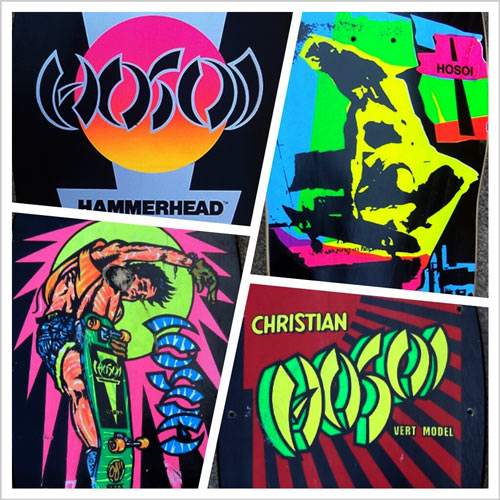
The infamous Hammerhead is the board that changed everything. Created by Christian and his father Ivan, it looked like nothing else on the wall. The nose was squared and widened into that now-iconic hammer shape, the outline was bold, strange, and instantly recognizable, and it carried the personality of the rider better than almost any pro model of its time. Skull Skates describes the Mini, Mid, and Max Hammerhead models as among the best-selling decks of the mid-1980s and credits Christian and Ivan with creating a completely original shape that captured skaters’ imaginations. That is the key point: the Hammerhead was not just a graphic. It was a silhouette. You could recognize it from across the shop.
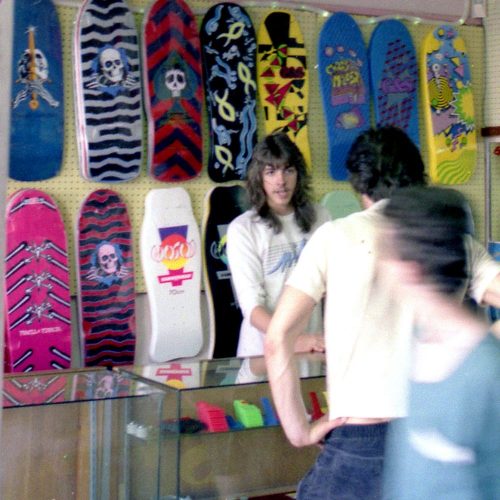
The Hammerhead also arrived at a moment when skateboard shapes were becoming weapons of identity. The popsicle deck had not yet flattened everything into one shared outline, and companies were fighting for attention with fish tails, cutaways, bat noses, squared snouts, deep concaves, double kicks, wheel wells, rails, copers, and louder graphics. The Hammerhead pushed that energy further. It made the pro model feel personal. A skater did not just buy a Christian Hosoi deck because it worked; they bought it because it looked like Christian skated. Big, stylish, loud, and impossible to ignore. The Hall of Fame credits the 1985 Hammerhead release with inspiring other major companies to chase more outlandish shapes of their own, which says everything about its impact.
This is also where the “different brands making Hosoi” story becomes especially interesting. Hosoi Skates was Christian’s namesake company, but Skull Skates was deeply tied to the Hammerhead’s mid-1980s production and mythology, while NHS later became part of the distribution and Santa Cruz-related reissue universe. Today, the name can still appear across different contexts: original-era Skull Skates Hammerheads, Hosoi Skateboards models based on classic and modernized shapes, and Santa Cruz/NHS reissues such as the Hosoi Collage deck. The official Hosoi Skateboards site describes the modern brand as being driven by Christian himself, with boards based on original shapes and designs plus modern takes, while NHS currently offers Santa Cruz Hosoi reissue decks using his iconic 1980s shape and artwork.
For Canadian shops and collectors, the Skull Skates connection gives Hosoi history a local charge. Skull Skates was not just a random licensee in the background; it was one of the companies that helped push the Hammerhead into the hands of real skaters during the period when Christian was absolutely detonating pools, ramps, jump ramps, ditches, and anything else he touched. Skull Skates’ own museum page calls him the highest-profile rider ever to ride for Skull Skates, which is a massive statement considering the depth of Canadian skateboard history tied to that brand.
On the board, Hosoi’s skating was built around amplitude and style. He had the rare ability to make huge tricks look relaxed. His Christ Air, Rocket Air, massive methods, inverts, lip tricks, McTwists, and floaty backside airs became magazine-cover material because they had shape. You did not just remember the trick; you remembered the posture, the extension, the clothes, and the silhouette against the coping. During the 1980s, that mattered. Skateboarding was being sold through magazines, posters, ads, videos, demos, and shop walls, and Hosoi was made for that visual world. The Hall of Fame credits him as a pioneer of the Rocket Air and Christ Air and describes his style as the antithesis to Tony Hawk’s trick-difficulty-based contest runs. The Hawk-versus-Hosoi rivalry became one of skateboarding’s most famous contrasts. Tony Hawk was precise, relentless, and increasingly technical. Hosoi was explosive, stylish, and emotionally magnetic. It was never as simple as one being “better” than the other; they represented different ideas of greatness. Hawk showed where tricks could go. Hosoi showed how big skateboarding could feel. Their rivalry helped define vert skating’s golden age because it gave fans two different visions to believe in: technical progression and pure style power.
Hosoi’s sponsors extended beyond board brands because he was one of the first skateboarders who could carry a full lifestyle image. Along with skate companies, he was associated with trucks, wheels, shoes, clothing, protection, and fashion-driven companies over the years. In the 1980s, this mattered because skateboarding was becoming more than a sport or underground hobby; it was becoming a full visual culture. Hosoi’s look, from spandex and headbands to high-flying ramp photos, made him one of the few skaters who could cross from contest reports into celebrity territory. The Los Angeles Times later described how his fame brought money, parties, nightclub access, and a lifestyle that moved fast even before he was legally old enough to drink.
By the late 1980s and into the early 1990s, skateboarding itself was changing fast. Street skating began shifting the centre of the industry away from vert ramps and into schoolyards, curbs, handrails, banks, wallrides, and urban spots. Hosoi remained one of the most recognizable figures from the golden age of vert, but the culture around him was moving in a new direction. At the same time, his personal life entered a difficult chapter. Like many young stars who experienced fame, money, pressure, and attention early, Hosoi faced personal struggles that pulled him away from the spotlight and interrupted the momentum of his career.
His later comeback became an important part of his story. After years away from the centre of skateboarding, Hosoi returned with a renewed sense of purpose and a deeper appreciation for the scene that had made him famous. His story was explored in the 2006 documentary Rising Son: The Legend of Skateboarder Christian Hosoi and later in his autobiography Hosoi: My Life as a Skateboarder Junkie Inmate Pastor. Rather than being remembered only for the difficult chapter, Hosoi became a symbol of resilience, second chances, and the lasting power of skateboarding to reconnect people with community, identity, and purpose.
Legacy is a tricky word with Hosoi because it is not just about contest wins, graphics, or one board shape. His legacy lives in style-first skating, in every shaped reissue deck that sells because silhouette still matters, in the way pro models can become personal mythology, and in the idea that a skater’s image can become bigger than the contest circuit.
The Hammerhead remains one of the most famous deck shapes ever made because it captured a rider, a time period, and an attitude in one outline. It is the rare skateboard that became a character. Hosoi also represents the complicated truth of skateboard fame. He was a prodigy, a superstar, a cautionary tale, a comeback story, a brand founder, a pastor, a father, a reissue-era icon, and still a working piece of skate culture. That range is why he continues to matter. Some pros are remembered for tricks. Some are remembered for graphics. Some are remembered for scandals or comebacks.
Christian Hosoi is remembered for all of it, but above everything else, he is remembered for style: big airs, big personality, big mistakes, big redemption, and one unmistakable Hammerhead that still looks like it wants to blast out of the coping and straight through the ceiling.